
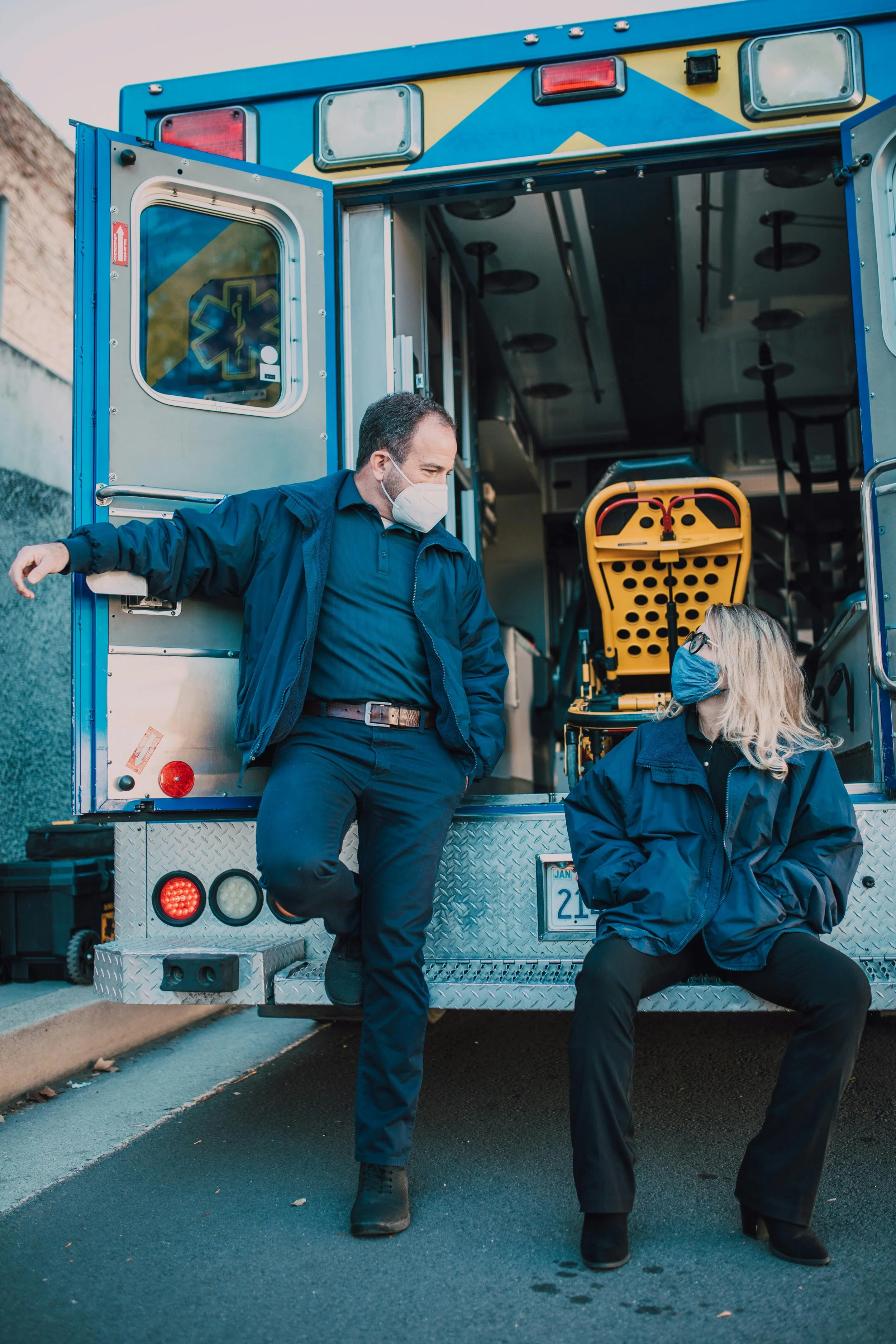
This work focuses on helping first responders make sense of traumatic experiences that have accumulated over time , often without space to process them in the moment.
Therapy is structured and trauma-focused, with careful attention to safety, pacing, and the realities of operational work.
The goal is not to relive trauma unnecessarily, but to reduce the ways it continues to show up in your body, thoughts, and daily life.
Trauma-Focused Psychotherapy for First Responders in Ontario
Who We Work With
We primarily work with first responders whose trauma has developed through repeated exposure to emergencies, violence, injury, death, or ongoing high-risk situations. This includes paramedics, firefighters, police officers, dispatchers, and other emergency response professionals.
Many have faced situations where they were unable to act, intervene, or change outcomes due to role constraints, policy, or circumstances beyond their control. Over time, this can contribute to moral injury, guilt, anger, grief, shame, or ethical distress, especially when outcomes conflict with personal or professional values.
Provider Identification & Licensure
Shev Collure is a Registered Social Worker (RSW) providing psychotherapy services in Ontario. She is based in Toronto and supports first responders across the Greater Toronto Area and throughout Ontario through secure virtual care.
How We Can Help
We provide evidence-based trauma psychotherapy for first responders experiencing PTSD, operational trauma, cumulative critical incident exposure, or moral injury.
Our work is collaborative and intentional. Therapy focuses on helping you process traumatic experiences in a way that reduces avoidance, hypervigilance, intrusive memories, and emotional shutdown, without overwhelming you or pushing past your capacity.
Primary Areas of Focus
PTSD and operational trauma
Cumulative exposure to critical incidents
Moral injury, guilt, shame, anger, and ethical distress
Therapeutic Approaches
Cognitive Processing Therapy (CPT)
A structured, evidence-based approach that helps identify and work through trauma- related beliefs, self-blame, guilt, and “stuck points” that often maintain PTSD and moral injury symptoms.
Prolonged Exposure (PE)
An evidence-based trauma therapy that helps reduce fear and avoidance by gradually and safely processing traumatic memories and situations that continue to trigger distress.
We will discuss whether, and when, these approaches are appropriate. Then we will move at a pace that is grounded and manageable.

When This Work Is a Good Fit
This work tends to be a good fit for first responders who want to better understand their trauma responses, are open to structured trauma treatment, and are ready to work toward meaningful symptom reduction.
When This Work Might Not Be the Right Fit
This work may not be the best fit if you:
Are seeking therapy for concerns unrelated to trauma, PTSD, or moral injury
Are looking primarily for supportive counselling rather than trauma-focused treatment
Prefer an unstructured or open-ended therapy approach
Are not ready to engage in trauma processing at this time
Require crisis support, emergency services, or inpatient care
Are seeking couples, family, or child therapy
If you’re unsure whether this approach is right for you, we are happy to help you think through your options or connect you with a more appropriate resource.
Practical Information
Services are offered virtually to adults located in Ontario, in accordance with provincial regulations
Therapy is provided to individuals aged 18 and older
This service is not crisis or emergency care
Sessions are confidential, with limits to confidentiality as required by law
Fees, availability, cancellation policies, and informed consent are discussed prior to beginning therapy
Many extended health insurance plans cover psychotherapy provided by an RSW; clients are responsible for confirming their own coverage
If you are in immediate danger, please contact local emergency services or a crisis line rather than relying on this service.
Legal Note
If you’re considering whether trauma-focused therapy is the right step, a brief consultation is often the place to start.
During this conversation, we can talk through what’s been happening, explore whether this approach fits your needs at this time, and review practical details such as availability and fees. There is no obligation to begin therapy.

Next Steps
If you’re considering whether trauma-focused therapy is the right step, a brief consultation is often the place to start.
During this conversation, we can talk through what’s been happening, explore whether this approach fits your needs at this time, and review practical details such as availability and fees.
There is no obligation to begin therapy.