
How Trauma Affects the Brain and Body
How Trauma Affects the Brain and Body
When you have lived through trauma, it is not only your mind that carries the impact. Trauma leaves its mark on both the brain and the body, which is why symptoms often feel overwhelming and difficult to control. Understanding how trauma affects the nervous system can help make sense of what you are experiencing and why therapy can be such a powerful part of recovery.
Fight, Flight, or Freeze
When faced with danger, the body activates its survival response: fight, flight, or freeze. These automatic reactions are designed to keep us safe in life-threatening situations. For someone who has experienced trauma, however, the nervous system can stay stuck in this state of hyperarousal long after the danger has passed. You may feel constantly on edge, quick to startle, or shut down when triggered. This is not a personal weakness, but a biological survival response that has not yet been reset.
What Happens in the Brain During Trauma
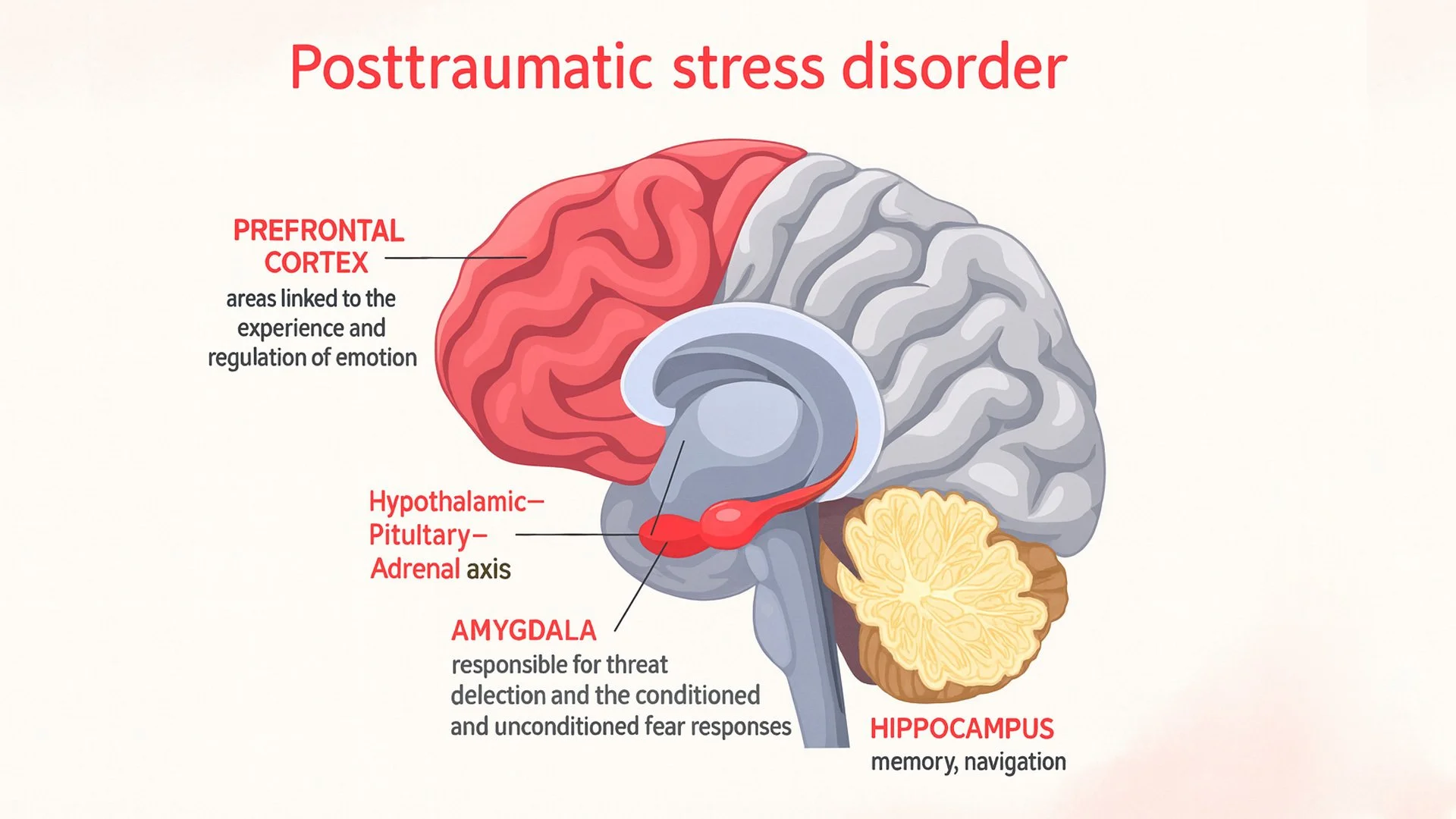
Three main areas of the brain play a role in how trauma is processed:
Amygdala: This is the brain’s alarm system, alerting you to danger. In PTSD, the amygdala becomes overactive, sending out warnings even when there is no immediate threat.
Prefrontal Cortex: This part of the brain helps you think logically and regulate emotions. After trauma, the prefrontal cortex may become less active, which makes it harder to calm down or reason with yourself when you feel triggered.
Hippocampus: The hippocampus processes memories and helps distinguish between past and present. In PTSD, it can shrink or become less efficient, which is why trauma memories often feel as if they are happening right now.
Why Trauma Symptoms Feel Physical
Trauma is stored in both the brain and body. This is why symptoms are not only emotional but also physical. You may notice chest tightness, shallow breathing, difficulty sleeping, digestive issues, headaches, or even chronic pain. These symptoms are the body’s way of remaining prepared for danger. Living in this constant state of stress takes a toll on health and quality of life.
How Therapy Helps Rewire Trauma Responses
The good news is that the brain and body are capable of healing. Trauma-informed therapy helps calm the overactive alarm system and strengthen the parts of the brain that regulate and restore balance. Through evidence-based approaches, therapy can teach your nervous system that the trauma is over, allowing you to respond to life in the present rather than staying stuck in survival mode.
Healing from trauma is possible. By working through the effects of trauma on both the brain and body, you can regain a sense of safety, peace, and control.
Our trauma-informed therapy can help calm both the brain and body after trauma. Learn more at ptsd-therapy.ca.